export@siegmachine.com
+86-182 1718 6723
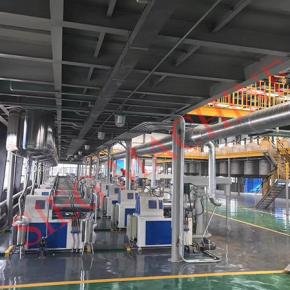
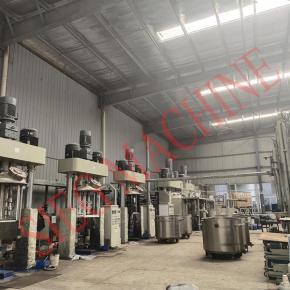
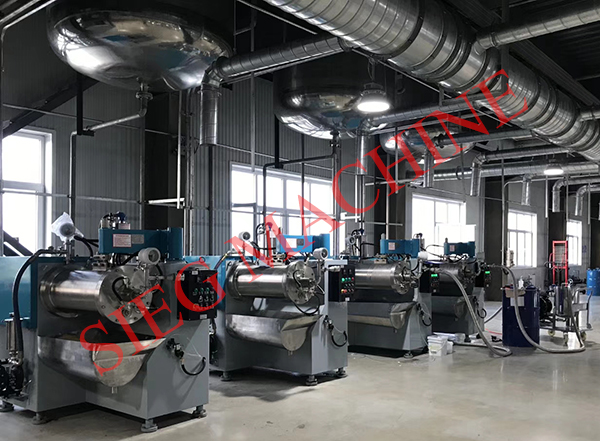
SC production line project in Shangdong,China (500L per hour)
Pesticide Suspension Concentrate (SC) Specific Production Process
A Pesticide Suspension Concentrate (SC) is a highly stable suspension system formed by dispersing
water-insoluble solid pesticide technical materials in a liquid medium (usually water) with the addition of various adjuvants.
Its production process requires precision to ensure the product's physical and chemical stability.
The following outlines the typical SC production workflow and its critical control points.
I. Main Production Process
1. Raw Material Preparation and Pre-treatment
· Technical Material: Must be solid (typically melting point > 60°C) and ground to a specific fineness (typically ≤5μm).
If the technical is coarse or granular, primary crushing (e.g., jet milling) is required first.
· Adjuvants:
· Dispersants: Such as polycarboxylates, naphthalene sulfonate formaldehyde condensates, etc.,
used to reduce particle surface energy and prevent agglomeration.
· Wetting Agents: Such as alkylphenol ethoxylates, fatty alcohol ethoxylates, etc., to help rapid wetting of the powder by water.
· Thickeners / Suspension Stabilizers: Such as xanthan gum, magnesium aluminum silicate, bentonite, etc.,
to increase system viscosity and slow sedimentation.
· Antifreeze Agents: Such as ethylene glycol, propylene glycol, to prevent freezing at low temperatures.
· Defoamers: Such as silicone-based agents, to reduce foam during production.
· Preservatives / Bactericides: Such as sodium benzoate, to prevent microbial growth.
· pH Adjusters: Such as citric acid, sodium hydroxide, to adjust the system to a suitable pH (typically 6-8), ensuring chemical stability.
· Medium: Deionized water, to minimize ionic interference.
2. Pre-dispersion (Coarse Dispersion)
· Purpose: To achieve initial uniform mixing of the technical material and adjuvants in the aqueous phase, forming a high-concentration slurry.
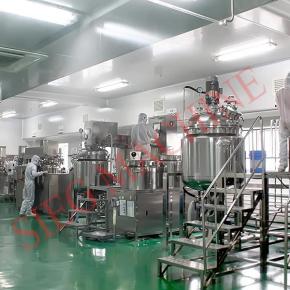
· Equipment: High-speed shear mixer/emulsifier.
· Process: Add measured water to the mixing tank, followed by adjuvants like antifreeze, wetting agents,
and dispersants in sequence, mixing thoroughly.
Under high shear (linear speed ~10-20 m/s), slowly add the pre-crushed technical powder to form a uniform coarse dispersion slurry.
Particle size at this stage is typically in the tens of micrometers range.
3. Wet Ultrafine Grinding (Core Step)
· Purpose: To grind the pre-dispersed slurry to the target particle size (D90 typically <5μm, ideally 1-3μm).
This is the key step determining suspension stability and efficacy.
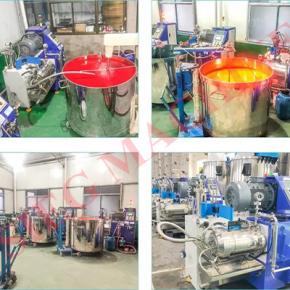
· Equipment: Horizontal or vertical bead mill (often using zirconia beads as the grinding media).
· Process:
1. Pump the pre-dispersion slurry into the grinding chamber of the bead mill.
2. Under the high-speed impact and shear of the grinding media (bead diameter typically 0.6-1.2mm), particles are repeatedly fractured.
3. Grind through single or multiple (series-connected) passes until the target particle size distribution is achieved.
Real-time sampling for particle size analysis is required.
4. Control the temperature during grinding (typically <45°C) to prevent thermal decomposition of the technical and adjuvant inactivation,
often using jacket cooling.
4. Formulation Adjustment and Post-processing
· Purpose: To add shear-sensitive adjuvants and finalize all product specifications.
· Process:
1. Transfer the qualified ground slurry to a formulation tank.
2. Under slow-speed stirring (to avoid excessive air entrapment), add thickeners
(often pre-prepared as a gel solution), defoamers, preservatives, etc.
3. Adjust the final pH using pH adjusters.
4. Add deionized water to reach the specified total volume.
5. Stir thoroughly (low-speed homogenization if necessary) until the system is uniform.
5. Filtration and Impurity Removal
· Purpose: To remove grinding media fragments, insufficiently ground coarse particles, and
potential impurities introduced during production.
· Equipment: Bag filters, vibrating screens, etc. (mesh size typically 200-400).
6. Quality Control and Testing
· Key Test Items:
· Particle Size Distribution: Using a laser particle size analyzer to ensure D90 meets the standard.
· Suspensibility: Tested according to CIPAC or national standard methods (e.g., GB/T 14825).
Qualified products typically require ≥90%.
· Viscosity: Measured with a rotational viscometer to balance pourability and stability.
· pH Value: Ensure it is within the specified range.
· Persistent Foam: Tested per standard methods, typically requiring foam volume ≤25mL after 1 minute.
· Heat Storage Stability: After storage at (54±2)°C for 14 days, test decomposition rate, suspensibility, syneresis (water separation), etc.
All indicators must remain acceptable. This is a key test for predicting shelf-life stability.
· Cold Storage Stability: After storage at (0±2)°C or (-5±2)°C for 7 days, observe for crystallization or irreversible separation.
7. Packaging
· Qualified product is filled via filling machines into specified plastic bottles or high-barrier packaging bags and sealed.
II. Key Process Control Points and Considerations
1. Technical Material Properties: The crystal form, hardness, hydrophobicity, etc.,
of the technical directly affect grinding efficiency and stability. Selecting matching dispersants is crucial.
2. Particle Size Control: Particle size is critical for SC stability. Oversized particles lead to sedimentation and caking;
excessively small particles may increase the risk of Ostwald Ripening
(dissolution of small particles and recrystallization on larger ones, causing crystal growth).
3. Grinding System Cleanliness: The bead mill and pipelines must be thoroughly cleaned when changing product types to prevent cross-contamination.
4. Zeta Potential: Adjust dispersants and pH to impart a high and uniform electric charge on particle surfaces,
enhancing dispersion stability via electrostatic repulsion.
5. Rheology Control: Use thickeners to form a weak gel network structure that "supports" particles at rest
but allows flow when poured (shear-thinning behavior).
6. Preventing Physicochemical Incompatibility: Conduct thorough compatibility testing between the technical material and all adjuvants,
as well as among adjuvants themselves, during formulation development.
III. Common Issues and Troubleshooting
· Sedimentation and Caking: May be caused by insufficient suspensibility, failure of the thickening system, or oversized particles.
Optimize dispersants and thickeners, ensure grinding meets standards.
· Paste Formation / Thickening: Abnormal viscosity increase after storage may stem from reactions between the technical and adjuvants, crystal growth, or improper thickener use.
· Syneresis (Whey Formation): Minor top-layer water separation is sometimes unavoidable, but significant syneresis indicates insufficient stability.
Strengthen steric hindrance or electrostatic repulsion stabilization mechanisms.
· Crystal Growth: Mainly caused by Ostwald Ripening or polymorphic transformation. Select crystal forms with lower solubility and incorporate specific adjuvants that inhibit crystal growth.
Summary
The production of Pesticide Suspension Concentrates (SC) is a systematic engineering process integrating formulation technology and precision processing.
Its core lies in using scientific adjuvant combinations and efficient wet grinding to stably and uniformly disperse solid technical materials in water,
forming a suspension system stable for long-term storage. A stable SC product offers advantages like ease of use, environmental friendliness (water-based), and high efficacy,
making it a vital development direction in modern pesticide formulations.
The production process must strictly control parameters at each stage and rely on a rigorous quality control system to ensure product performance.
Contact: Lucas Shu
Phone: +86-182 1718 6723
E-mail: export@siegmachine.com
Whatsapp:+86-182 6708 5695
Add: NO.556,caofeng road,Jiading district,Shanghai, China