export@siegmachine.com
+86-182 1718 6723
Choosing a bead mill comes down to eight factors: chamber lining and rotor material, rotor structure, separation device, mechanical seal, production efficiency, operation, cleaning and color change, and safety protection. The two decisions that affect cost and performance most are the rotor type and the separation device, because they determine grinding efficiency, media retention, and price.
The grinding chamber lining and rotor are usually made of stainless steel, alloy steel, or ceramics. But the same material name does not mean the same quality. Two mills both listed as "SS316L" can differ in hardness, corrosion resistance, and service life, depending on the supplier's material grade and heat treatment.
What to check: Ask for the material certificate and the hardness value (HRC) of the rotor. For abrasive or corrosive products, ceramic-lined chambers and zirconia or tungsten carbide rotors last longer, even though they cost more upfront.
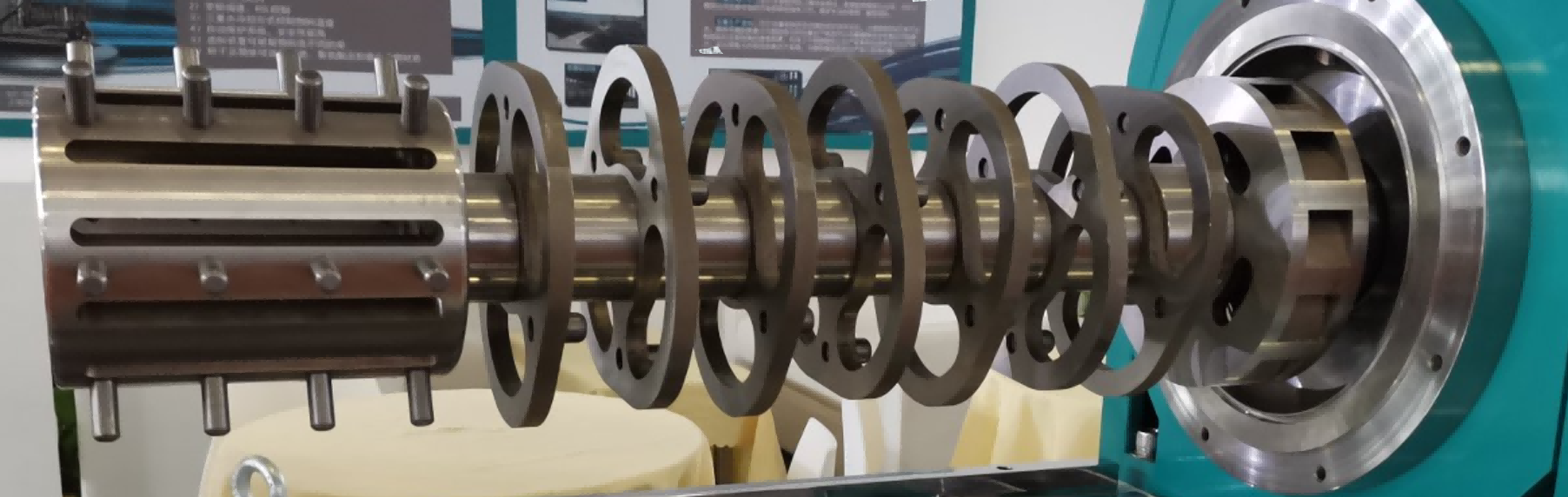
Nano bead mills mainly use two rotor structures: pin type (rod-pin) and turbo type.
The pin-type rotor is currently the more widely used and more cost-effective choice. It handles a broad range of viscosities and is easier to maintain. The turbo-type rotor provides higher energy density and is used for sub-micron grinding, but it costs more and is more sensitive to operating conditions.
What to check: If your target particle size is above 1 μm, a pin-type rotor is usually sufficient. Choose turbo type only when you need sub-micron grinding and your product justifies the higher cost.
The separation device keeps the grinding media inside the chamber while letting the ground product flow out. There are two main types.
Static ring and moving ring. The standard separation design. It works well for most applications and is the lower-cost option.
Static centrifugal tubular filter. Used in high-flow bead mills. It allows higher throughput and better media retention at high flow rates, but the price difference between the two types is significant.
What to check: Match the separation device to your flow rate. For standard production, a static ring is enough. For high-flow, high-volume lines, the centrifugal filter may be worth the extra cost.
The mechanical seal is one of the most common failure points in a bead mill. A poor seal leaks, contaminates the product, and causes downtime.
What to check: Confirm the seal is durable and leak-resistant. More importantly, check what cooling liquid the seal circulation uses. It must be compatible with your grinding material. If the seal cooling liquid is not compatible, it can contaminate the product during production, especially in food, cosmetic, and pharmaceutical applications.
Production efficiency depends on structural design: chamber geometry, rotor design, media separation, and cooling capacity. A well-designed mill reaches the target particle size in fewer passes and with less energy.
What to check: Ask for the flow rate and the achievable particle size at that flow rate. A mill that claims high flow but cannot hold fineness is not efficient in practice.
The control system should be centralized and compact, with simple operation. This matters most in multi-shift production, where operators change frequently.
What to check: Look for PLC control with temperature and pressure monitoring. Manual control is acceptable for lab or small-batch use, but production lines benefit from automation.
Ink, paint, and cosmetic production involve frequent color and product changes. Cleaning time directly affects output.
What to check: Look for a chamber with no dead angles and a good self-cleaning effect. Quick-open designs and CIP (clean-in-place) options reduce changeover time. Also check how easy it is to remove and replace the zirconia beads.
A bead mill runs under pressure, at high speed, and with temperature buildup. Safety protection is not optional.
What to check: Confirm the mill has pressure protection, electrical protection, temperature protection, and cooling liquid protection. For solvent-based products, confirm the motor and control cabinet meet explosion-proof standards.
| Factor | What to check | Why it matters |
| Chamber and rotor material | Material certificate, HRC hardness | Service life, contamination risk |
| Rotor structure | Pin type vs turbo type | Efficiency, cost, fineness |
| Separation device | Static ring vs centrifugal filter | Flow rate, media retention, price |
| Mechanical seal | Leak resistance, cooling liquid compatibility | Downtime, product contamination |
| Production efficiency | Flow rate at target fineness | Energy and time cost |
| Operation | PLC vs manual control | Labor, consistency |
| Cleaning | No dead angle, self-cleaning, CIP | Changeover time |
| Safety | Pressure, electrical, temperature protection | Compliance, operator safety |
Which rotor type is better, pin type or turbo type?
Pin type is more widely used and more cost-effective for most applications. Turbo type is better for sub-micron grinding but costs more.
How do I know if the mechanical seal will contaminate my product?
Check the cooling liquid used in the seal circulation. It must be compatible with your grinding material.
What is the difference between a static ring and a centrifugal filter separator?
A static ring is the standard, lower-cost design. A centrifugal tubular filter is used in high-flow mills and costs significantly more.
What safety protection should a bead mill have?
Pressure protection, electrical protection, temperature protection, and cooling liquid protection. For solvent-based products, explosion-proof motors are also required.
Tell us your material, target particle size, and required capacity. Our engineers will recommend the right model and provide a quotation within 24 hours.
View our FGS series bead mill for specifications and models.
Contact: Lucas Shu
Phone: +86-182 1718 6723
E-mail: export@siegmachine.com
Whatsapp:+86-182 6708 5695
Add: NO.556,caofeng road,Jiading district,Shanghai, China